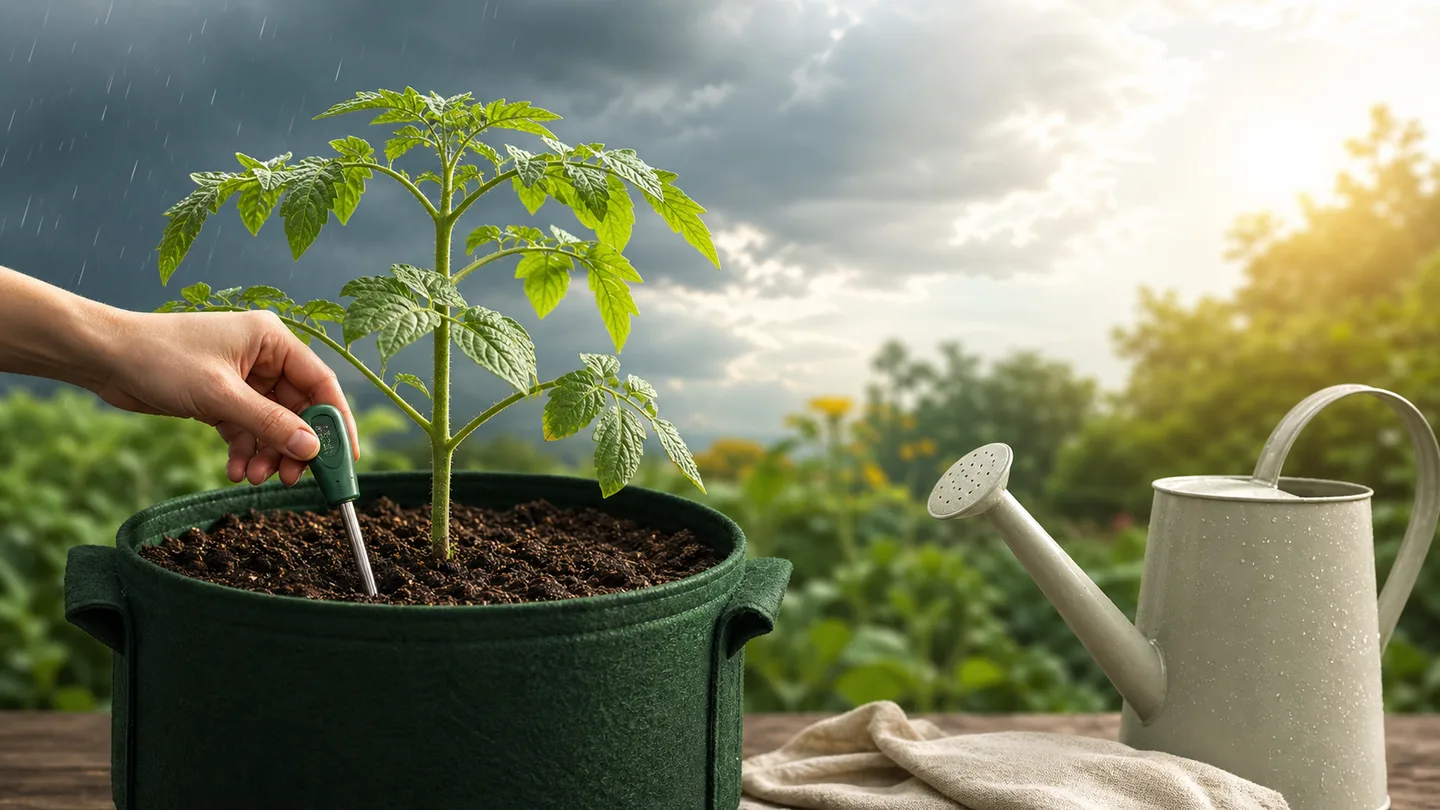
The Food and Agriculture Organization's irrigation guidance calculates crop evapotranspiration from reference evapotranspiration and a crop coefficient. In plain language, water demand changes with weather and with the crop itself. FAO also describes soil-water balance and irrigation scheduling as ways to track water entering and leaving the root zone.
Why fixed calendars are weak
A weekly reminder ignores heat, rainfall, wind, plant growth, soil texture, mulch, and container size. University of Minnesota Extension advises checking soil conditions and notes that sandy, well-drained soils generally need water more often than soils that retain moisture.
A safer home-garden workflow
- Use weather data to estimate whether demand is rising or falling.
- Check moisture in the root zone rather than judging only the surface.
- Confirm that containers drain freely.
- Water near the soil surface and avoid unnecessary leaf wetness.
- Review the plant after watering; persistent wilt may have causes other than dry soil.
What an app should avoid
An app should not promise exact water volumes without reliable information about container volume, growing medium, plant size, drainage, and recent conditions. Recommendations should be presented as adjustable guidance.