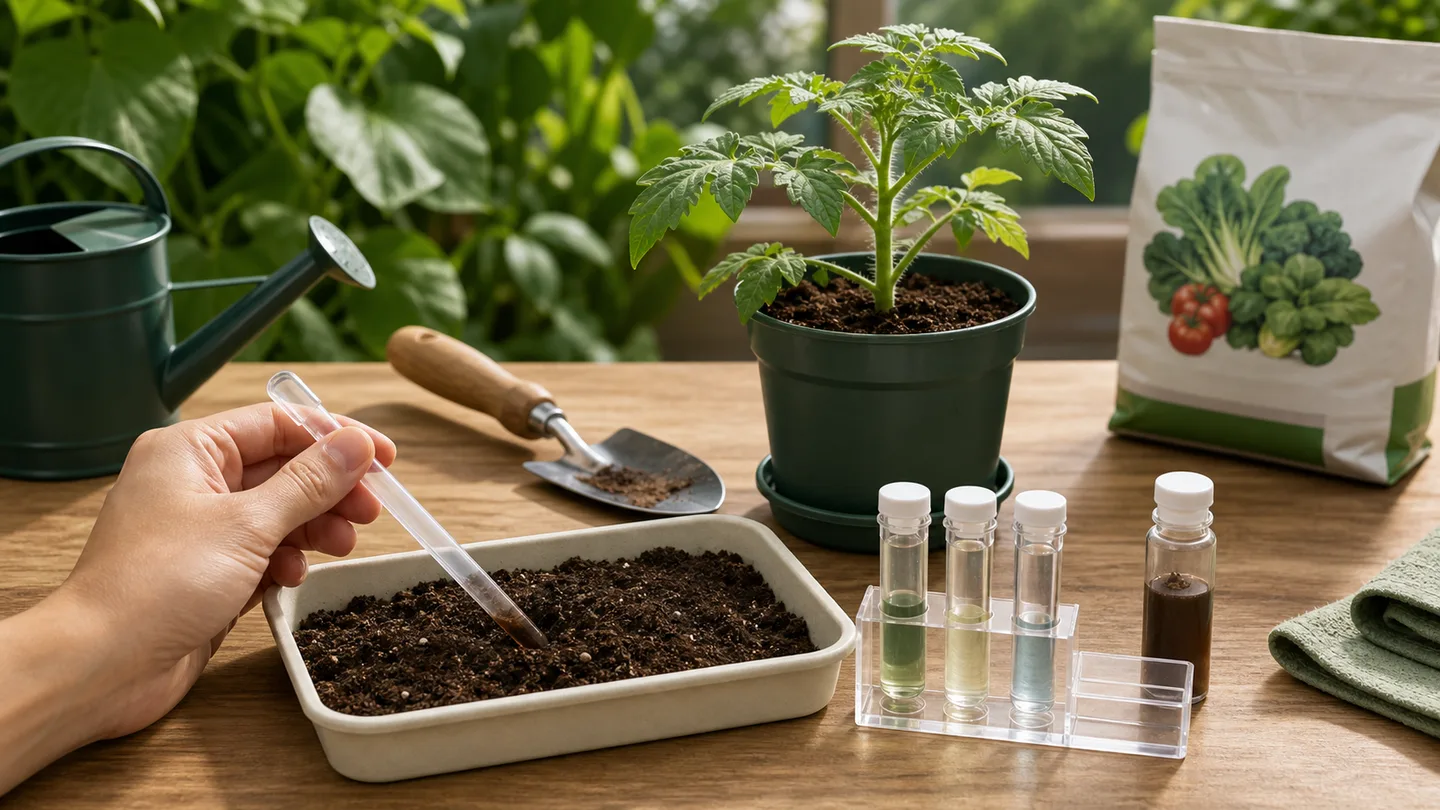
A laboratory soil test provides a snapshot of properties such as pH, organic matter, texture, and available nutrients. University of Minnesota Extension recommends testing because it helps determine whether nutrients are needed and how much compost, manure, or fertilizer to apply.
Why symptoms can mislead
Yellow leaves or slow growth can result from nutrient shortage, but also from excessive water, poor drainage, root damage, unsuitable pH, low light, pests, disease, or temperature stress. Adding fertilizer without identifying the cause can make the problem worse.
What a useful soil test can tell you
- Whether soil pH is suitable for the intended crop.
- Whether phosphorus or potassium is already sufficient or excessive.
- How organic matter and texture may affect management.
- Which amendments are recommended by the testing laboratory.
A responsible workflow
- Use a reputable laboratory that provides locally calibrated recommendations.
- Collect a representative composite sample using the laboratory's instructions.
- State what you intend to grow so recommendations match the crop.
- Apply only the nutrients and quantities recommended.
- Keep records and retest at an interval appropriate for the garden and recent amendments.
Containers need different judgment
Garden-soil test recommendations should not be transferred blindly to containers. Potting media, drainage, irrigation frequency, and limited root volume change nutrient behavior. Follow guidance intended for container-grown plants.