Soil & nutrients · Evidence review

Fertilizer is not plant medicine. Test before adding more.

A struggling plant does not automatically need fertilizer. Soil testing helps separate actual nutrient needs from guesswork.

Reviewed June 11, 2026 · Sources listed below
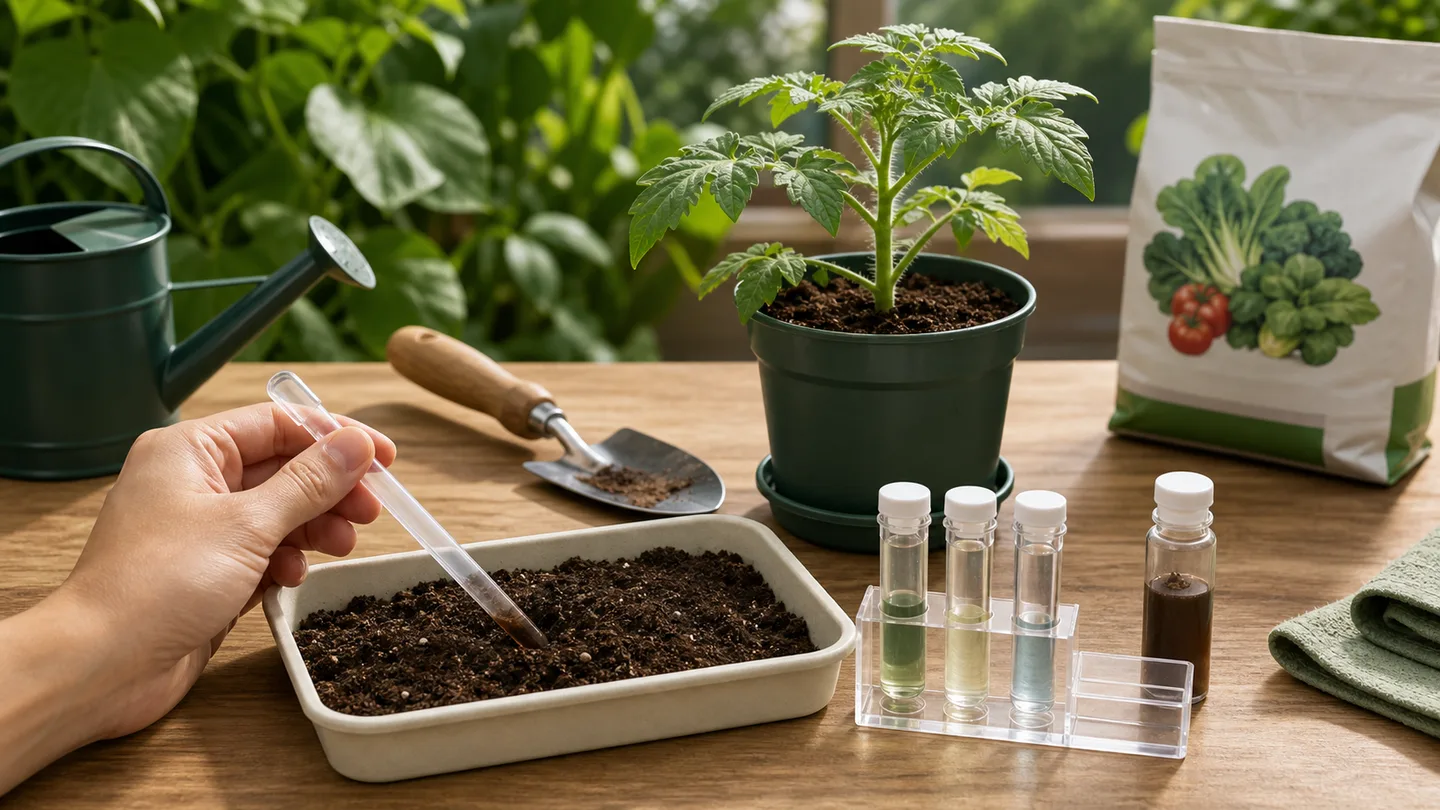
Soil sample prepared for testing before fertilizing

A laboratory soil test provides a snapshot of properties such as pH, organic matter, texture, and available nutrients. University of Minnesota Extension recommends testing because it helps determine whether nutrients are needed and how much compost, manure, or fertilizer to apply.

What the evidence supports: fertilizer choice and rate should be based primarily on soil-test results and crop needs. Visual symptoms alone are not a reliable nutrient prescription.

Why symptoms can mislead

Yellow leaves or slow growth can result from nutrient shortage, but also from excessive water, poor drainage, root damage, unsuitable pH, low light, pests, disease, or temperature stress. Adding fertilizer without identifying the cause can make the problem worse.

What a useful soil test can tell you

  • Whether soil pH is suitable for the intended crop.
  • Whether phosphorus or potassium is already sufficient or excessive.
  • How organic matter and texture may affect management.
  • Which amendments are recommended by the testing laboratory.

A responsible workflow

  1. Use a reputable laboratory that provides locally calibrated recommendations.
  2. Collect a representative composite sample using the laboratory's instructions.
  3. State what you intend to grow so recommendations match the crop.
  4. Apply only the nutrients and quantities recommended.
  5. Keep records and retest at an interval appropriate for the garden and recent amendments.

Containers need different judgment

Garden-soil test recommendations should not be transferred blindly to containers. Potting media, drainage, irrigation frequency, and limited root volume change nutrient behavior. Follow guidance intended for container-grown plants.

Sources

  1. Soil testing for lawns and gardens, University of Minnesota Extension
  2. Quick guide to fertilizing plants, University of Minnesota Extension
  3. Soil testing on fruit and vegetable farms, University of Minnesota Extension
Tanah & nutrisi · Tinjauan bukti

Pupuk bukan obat tanaman. Uji dulu sebelum menambahkan.

Tanaman yang layu tidak otomatis membutuhkan pupuk. Pengujian tanah membantu memisahkan kebutuhan nutrisi yang sebenarnya dari tebakan belaka.

Ditinjau 11 Juni 2026 · Sumber tercantum di bawah
Sampel tanah yang disiapkan untuk pengujian

Uji laboratorium tanah memberikan gambaran mengenai sifat-sifat tanah seperti pH, bahan organik, tekstur, dan ketersediaan nutrisi. Layanan Penyuluhan Universitas Minnesota merekomendasikan pengujian karena membantu menentukan apakah nutrisi memang dibutuhkan serta seberapa banyak kompos, pupuk kandang, atau pupuk kimia yang perlu diberikan.

Apa yang didukung bukti: pilihan dan takaran pupuk harus didasarkan terutama pada hasil uji tanah dan kebutuhan tanaman. Gejala visual saja bukan merupakan resep nutrisi yang dapat diandalkan.

Mengapa gejala visual bisa menipu

Daun kuning atau pertumbuhan lambat bisa disebabkan oleh kekurangan nutrisi, tetapi juga bisa akibat air berlebih, drainase buruk, kerusakan akar, pH tidak sesuai, cahaya rendah, hama, penyakit, atau stres suhu. Menambahkan pupuk tanpa mengidentifikasi penyebabnya dapat memperburuk masalah.

Apa yang bisa diberitahukan oleh uji tanah

  • Apakah pH tanah sesuai untuk jenis tanaman yang direncanakan.
  • Apakah kandungan fosfor atau kalium sudah cukup atau justru berlebihan.
  • Bagaimana bahan organik dan tekstur tanah memengaruhi pengelolaan kebun.
  • Perbaikan tanah apa saja yang direkomendasikan oleh laboratorium penguji.

Alur kerja yang bertanggung jawab

  1. Gunakan laboratorium terpercaya yang memberikan rekomendasi sesuai kondisi lokal.
  2. Kumpulkan sampel tanah campuran yang representatif sesuai instruksi laboratorium.
  3. Nyatakan apa yang ingin Anda tanam agar rekomendasinya sesuai dengan jenis tanaman.
  4. Berikan hanya jenis nutrisi dan jumlah yang direkomendasikan.
  5. Simpan catatan pengujian dan lakukan uji ulang dalam jangka waktu yang sesuai bagi kebun.

Wadah memerlukan penilaian yang berbeda

Rekomendasi uji tanah kebun tidak boleh diterapkan begitu saja pada tanaman dalam pot/wadah. Media tanam pot, drainase, frekuensi penyiraman, dan volume akar yang terbatas mengubah perilaku nutrisi. Ikuti panduan khusus untuk tanaman dalam wadah.

Sumber

  1. Pengujian tanah untuk halaman dan kebun, Universitas Minnesota
  2. Panduan cepat memupuk tanaman, Universitas Minnesota
Suelo y nutrientes · Revisión de evidencia

El fertilizante no es medicina para plantas. Analice antes de agregar más.

Una planta marchita no siempre necesita fertilizante. Las pruebas de suelo separan las necesidades reales de las conjeturas.

Revisado el 11 de junio de 2026 · Fuentes enumeradas a continuación
Muestra de suelo preparada

Una prueba de laboratorio determina el pH y nutrientes disponibles para guiar la cantidad de compost o abono a aplicar.

Sol et nutriments · Examen des preuves

L'engrais n'est pas un médicament pour les plantes. Testez avant d'en ajouter.

Une plante en difficulté n'a pas toujours besoin d'engrais. Le test de sol guide les apports réels.

Révisé le 11 juin 2026 · Sources listées ci-dessous
Échantillon de sol préparé

L'analyse de sol permet de mesurer le pH et les nutriments pour fertiliser de façon équilibrée.

Boden & Nährstoffe · Überprüfung der Beweise

Dünger ist keine Pflanzenmedizin. Testen Sie, bevor Sie mehr hinzufügen.

Eine schwächelnde Pflanze braucht nicht automatisch Dünger. Bodentests zeigen den echten Bedarf.

Geprüft am 11. Juni 2026 · Unten aufgeführte Quellen
Bodenprobe für Test

Ein Bodentest ermittelt pH-Wert und Nährstoffe, um eine Überdüngung sicher zu vermeiden.

土と栄養 · エビデンスレビュー

肥料は植物の薬ではありません。追加する前に検査しましょう。

生育不良の植物に必ずしも肥料が必要とは限りません。土壌検査で必要な栄養素を特定します。

2026年6月11日レビュー済 · 以下に出典を記載
土壌検査用サンプルの準備

実験室での土壌検査により、pHや有機物量、有効な栄養素が分かります。これにより正しい量の施肥が可能になります。