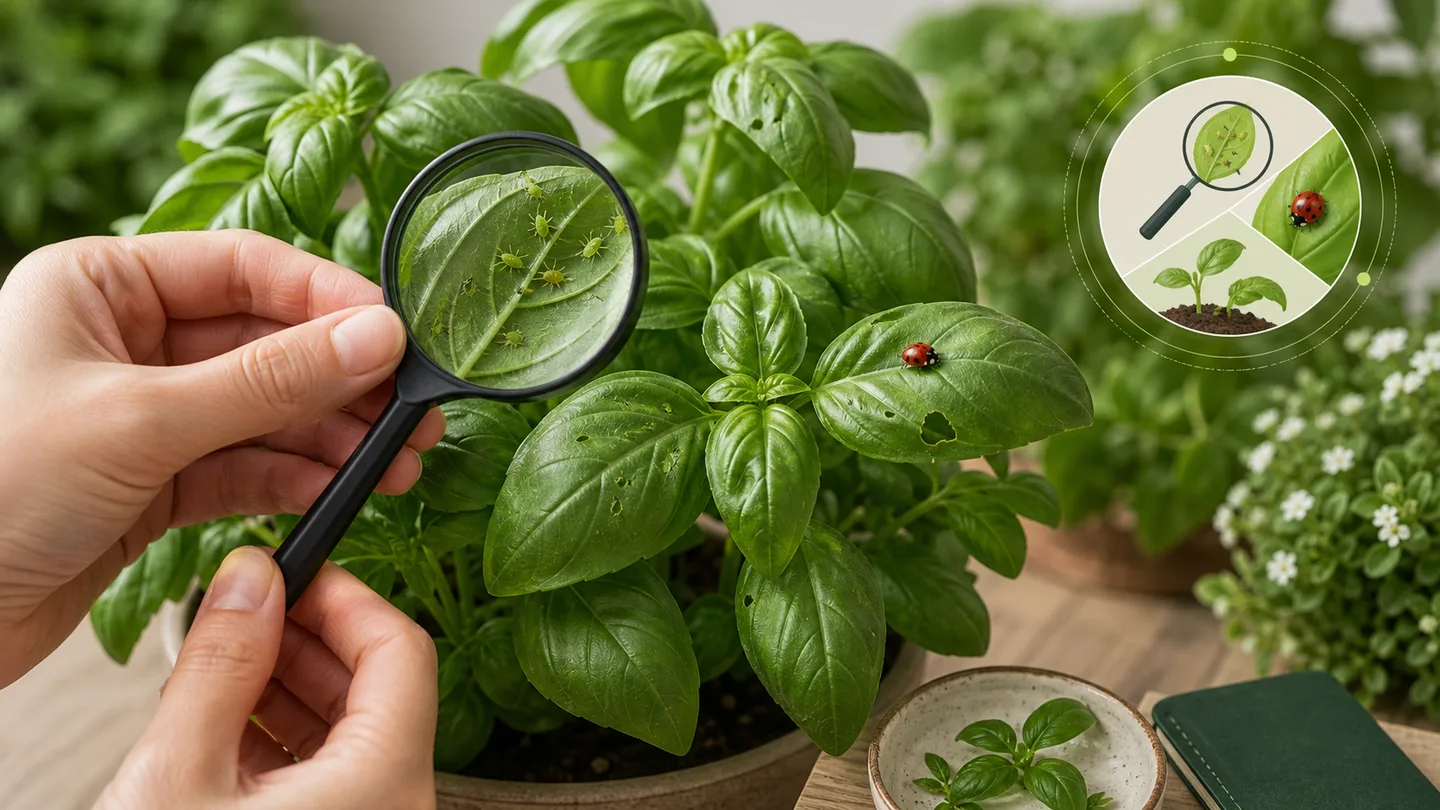
The US Environmental Protection Agency describes integrated pest management, or IPM, as an environmentally sensitive approach that uses information about pest life cycles, environmental interactions, and available controls. IPM is not a single treatment and does not mean spraying on a schedule.
Not every insect is a problem
Gardens contain pests, predators, pollinators, decomposers, and harmless visitors. Treating before identification can kill beneficial organisms while failing to solve the original problem. Observe the plant, the organism, the damage pattern, and how quickly damage is changing.
The basic IPM sequence
- Prevent: choose suitable plants, maintain healthy growing conditions, and inspect new plants.
- Monitor: check leaves, stems, roots, and traps regularly; record changes.
- Identify: distinguish the pest from beneficial or harmless organisms.
- Set a threshold: decide whether damage justifies action.
- Control carefully: begin with effective low-risk physical, cultural, or biological options; use pesticides judiciously when needed.
- Evaluate: confirm whether the intervention worked and watch for recurrence.
Why calendar spraying is weak practice
Preventive spraying without evidence of a target pest can create unnecessary exposure, harm non-target organisms, and obscure the underlying growing-condition problem. IPM uses interventions in response to observed conditions and identified risks.
What an app should communicate
An app should help users document symptoms and identify possibilities, but it should not recommend a pesticide solely from a photograph. High-risk, rapidly spreading, regulated, or uncertain cases should be escalated to a local extension service or qualified professional.