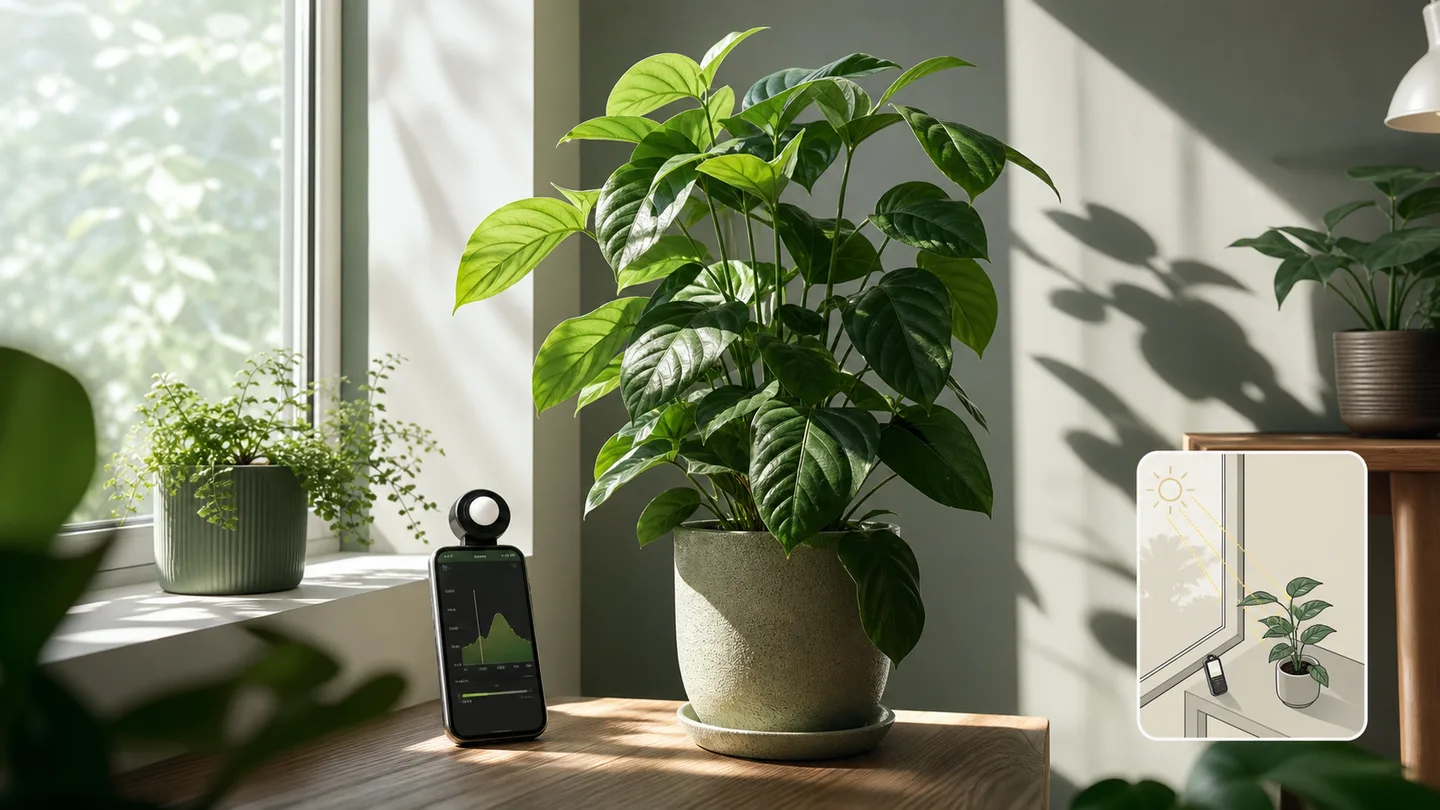
Light drives photosynthesis, allowing plants to convert carbon dioxide and water into carbohydrates used for growth. University of Minnesota Extension notes that without adequate light, plants deplete their energy reserves. It also distinguishes plant-relevant measurements from lumens, which describe brightness as perceived by the human eye.
Observe the location, not only the window direction
Window orientation is useful context, but trees, neighboring buildings, curtains, season, latitude, and distance from the glass can substantially change the light reaching a leaf. Compare the intended position at several times of day before placing a light-demanding plant there.
Signs that light may be insufficient
- New growth becomes thin, stretched, or widely spaced.
- The plant bends strongly toward the light source.
- Growth slows despite otherwise appropriate care.
- Flowering plants fail to bloom.
A safer adjustment workflow
- Confirm the species and its approximate light requirement.
- Observe or measure the actual plant position across the day.
- Move the plant gradually; sudden exposure to intense direct sun can damage foliage.
- If using supplemental lighting, follow the fixture manufacturer's safety guidance and preserve a dark period.
- Review new growth over several weeks rather than judging after one day.
What an app should avoid
An app should not classify a space from one photograph or window direction alone. Useful recommendations should include uncertainty and ask about obstructions, distance from the window, season, and visible plant response.