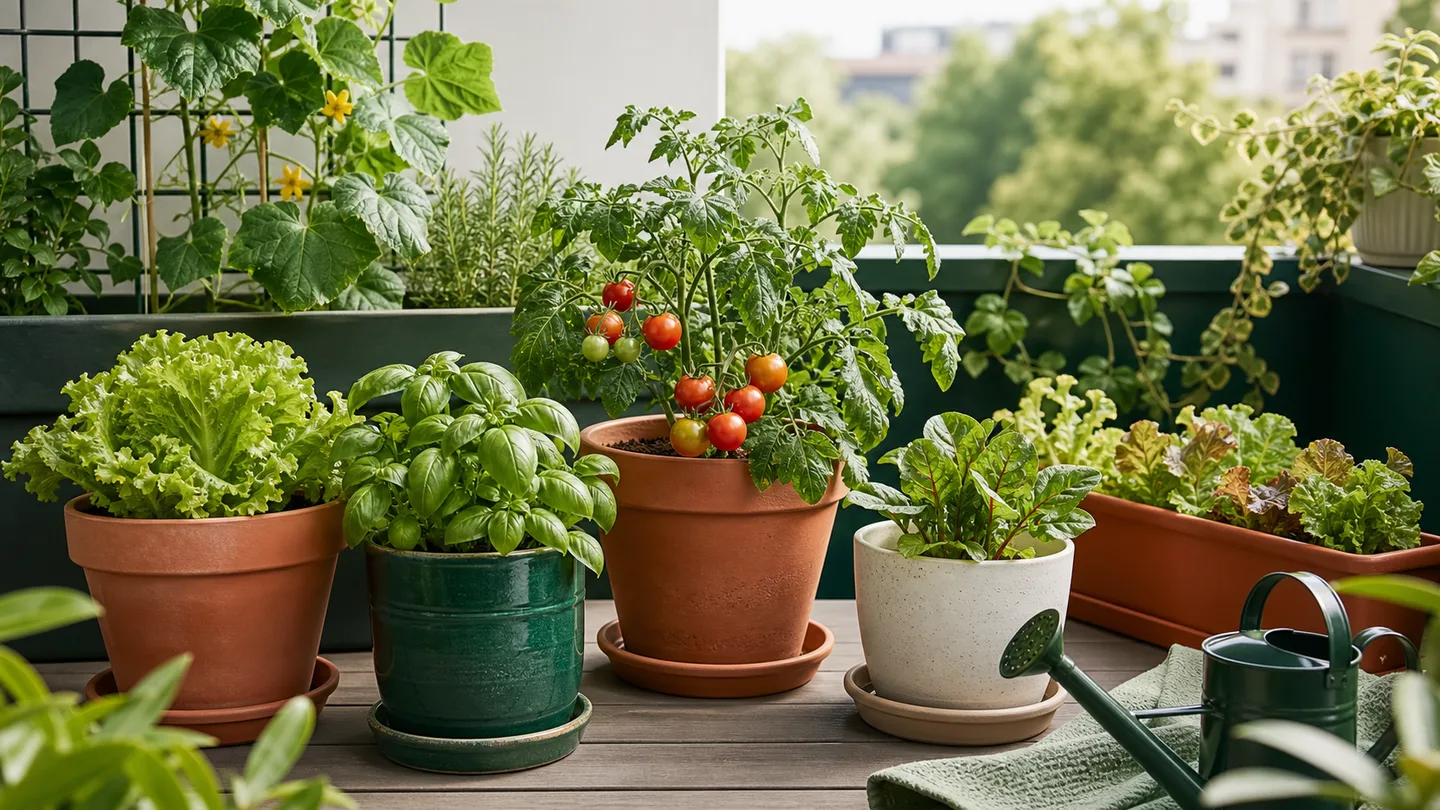
USDA guidance identifies several basic requirements for container gardening: containers should have good drainage and be food-safe, and gardeners should avoid containers previously used for chemicals. USDA also recommends starting with suitable soil and compost and considering drainage.
Choose the container before the crop
- Use a food-safe container with drainage holes.
- Do not use containers that previously stored chemicals.
- Match container size to the mature root system, not the seedling.
- Make sure the filled container can be supported safely on the balcony, shelf, or structure.
Use growing media designed for containers
Container roots need both water and air. Dense garden soil can behave poorly in pots. Use an appropriate container growing medium and maintain unobstructed drainage. Repeated watering can also leach nutrients, so fertilization should follow the crop, medium, and product-label instructions rather than an arbitrary dose.
Light and water remain limiting factors
USDA's raised-bed and container resources emphasize access to sunlight, water, and growing media. Measure the actual light in the intended location and choose crops accordingly. Avoid promising that a specific vegetable will thrive without knowing the site's conditions.
Before eating the harvest
Use clean hands and tools, follow local food-safety guidance, and do not eat produce that may have been exposed to unsafe chemicals or contaminated growing materials. If contamination is suspected, seek advice from a local food-safety or extension authority.