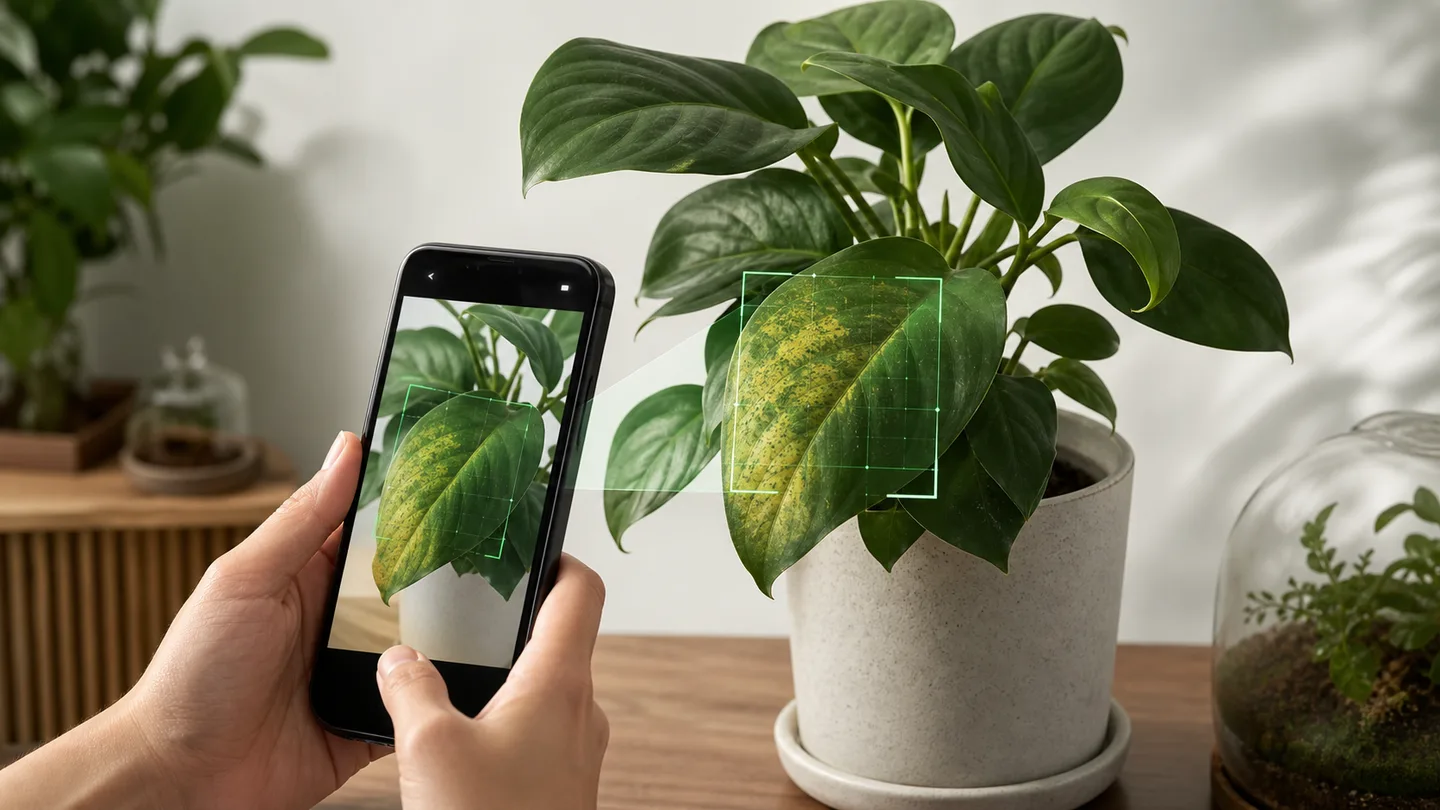
Computer-vision systems can classify visible plant symptoms and help a gardener organize observations. Reviews of plant-disease detection research describe substantial progress, but they also repeatedly identify deployment challenges involving image quality, dataset availability, symptom similarity, environmental variation, and generalization beyond controlled datasets.
Why a photograph is not the whole diagnosis
Yellowing, leaf spots, wilting, and curling can have multiple causes. Nutrient stress, water stress, pests, pathogens, light exposure, and physical damage can produce overlapping visual signs. A model sees the information in its input; it cannot inspect roots, test tissue, or recover context that was never captured.
How to use AI responsibly
- Capture several clear images: the whole plant, affected leaves, stems, and the soil or container.
- Record context: recent watering, weather, fertilizer, pests, and how quickly symptoms developed.
- Treat the result as a shortlist, not a verdict.
- Use low-risk corrective steps first, such as checking drainage or isolating a potentially infested plant.
- Escalate unusual, severe, rapidly spreading, or food-safety-related cases to a local extension service, plant clinic, or qualified professional.
What Hortiku should communicate
A responsible product should show uncertainty, explain what evidence influenced a suggestion, and avoid recommending regulated treatments without appropriate local context. It should also make it easy to seek human help.